

OMAD | Now The Real Work Begins!
Joe returns to the end of rapid early loss: establish a repeatable practice, recognize excitement as a passing feeling, and let the daily pattern continue after the honeymoon.
The reviewed source record
This library covers 144 regular videos and 21 livestreams from the reviewed catalog. Every entry has an original editorial note, its own illustrated source page, and routes into the principles it informs. The synthesis behind those principles draws on the complete channel; this is where each recording receives its reviewed page.
Reviewed span: to · 165 of the channel’s 380 public recordings reviewed so far.
Browse the talks
Newest first by default. Titles are Joe’s original YouTube titles; the short descriptions are this site’s attributed editorial summaries.
Showing 1–18 of 165 recordings
Page 1 of 10 · Each source note links to the original recording on YouTube.
Joe returns to the end of rapid early loss: establish a repeatable practice, recognize excitement as a passing feeling, and let the daily pattern continue after the honeymoon.

Joe attributes stalled OMAD progress in older practitioners to oversized single meals and prescribes a strict low-calorie one-plate start. He claims smaller meals bring the hunger high on as early as day five.

Joe presents a visualization in which mindful contentment forms a protected inner space. He uses diminishing food preoccupation as his test for whether craving has been uprooted rather than merely suppressed.

Joe argues that entitlement and growing preoccupation with food are warning signs that a fast is being endured without weakening attachment. He describes the deeper aim as retraining the mind until excess no longer feels desirable.

Joe argues that craving grows through the search for a perfect option and that a disrupted meal schedule need not become a full-day abandonment. The viewer Q&A extends the theme to bounded sweets, meal quantity, and meditation.

Joe shows one of his own plant-based, high-carbohydrate, low-fat meals, pairing a fruit-and-greens smoothie with potatoes and oatmeal. He presents it as a plate example, not a comprehensive OMAD lesson.

Joe frames OMAD as a small daily practice of renunciation rather than merely a weight-control method. He argues that durable motivation grows from wanting freedom from excess and, eventually, from cultivating non-craving.

Joe restates his strict structural rules: a fixed opening time, one continuous sitting, no grazing, and only preplanned exceptions. He also gives his account of the early adaptation period and argues against postponing the start.
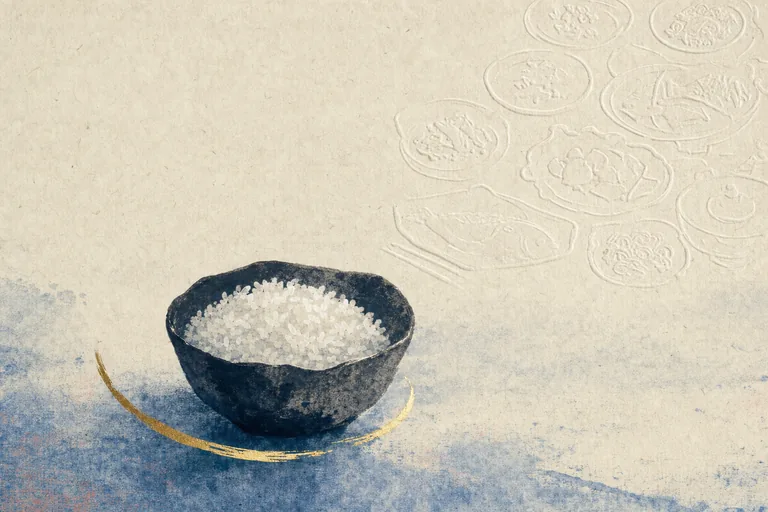
Joe proposes an occasional plain-rice meal as an exercise in chosen simplicity and appreciation. He argues that deliberately lowering the meal's novelty can expose the search for a perfect food solution and strengthen self-control.

Joe uses the Buddhist idea of impermanence as a week-long observation exercise. He argues that seeing cravings arise and pass can make their discomfort feel finite and train attention during a fast.

Joe describes successful fasting as a rhythm that can be lost after a long break but relearned through effort and trust in prior experience. He puts renewed perspective and internally generated motivation ahead of changes to the method.

Joe uses deliberately repellent imagery to argue for fully relinquishing self-destructive habits rather than taking temporary breaks from them. He presents appetite training as a model that can generalize to other cravings.

Joe compares the mind to a dam that can redirect a flood of desire. He argues that OMAD practices concentration and that self-control learned around appetite can carry into other parts of life.

Joe describes shame, criticism, and discomfort as potentially catalytic forces in his own self-improvement story. He argues that change begins when a person confronts the habits and character that produced the unwanted situation.

Joe reframes accumulated false starts and stalled efforts as useful experience rather than wasted time. He argues that remembering previous struggle can supply perspective and momentum during a difficult stretch.

Joe surveys mortality, missing support, diet perfectionism, and long stalls as disappointments that can distract from the practice. He argues for acting on the present, treating outside conditions as secondary, and refusing shortcut culture.

Joe describes his then-current starch-centered meal pattern while retaining a fixed fasting boundary and a maintenance margin. He also discusses his personal stone history and argues that longer fasts should remain subordinate to a stable OMAD practice.

Joe describes a mental middle ground between wanting and rejecting an object of desire. He links that space to contentment, the Buddhist middle way, and freedom from the attention consumed by craving.