Editorial source note
OMAD Homework - Week 2 | Eat a Bowl of Rice
Joe proposes an occasional plain-rice meal as an exercise in chosen simplicity and appreciation. He argues that deliberately lowering the meal's novelty can expose the search for a perfect food solution and strengthen self-control.
Related principles
An editorial summary of views Joe expresses in the linked video. The original recording remains the primary source for his full words and context.
Detailed notes
A closer look at the ideas, examples, and reasoning Joe presents in this recording.
What remains when the meal stops entertaining
Joe presents this recording as the second assignment in a short series of contemplative exercises. The first concerned impermanence; the next moves the lesson onto the plate. He chooses an ordinary staple and temporarily removes the variety, optimization, and anticipation that can make a meal into a project.
One day, one bowl
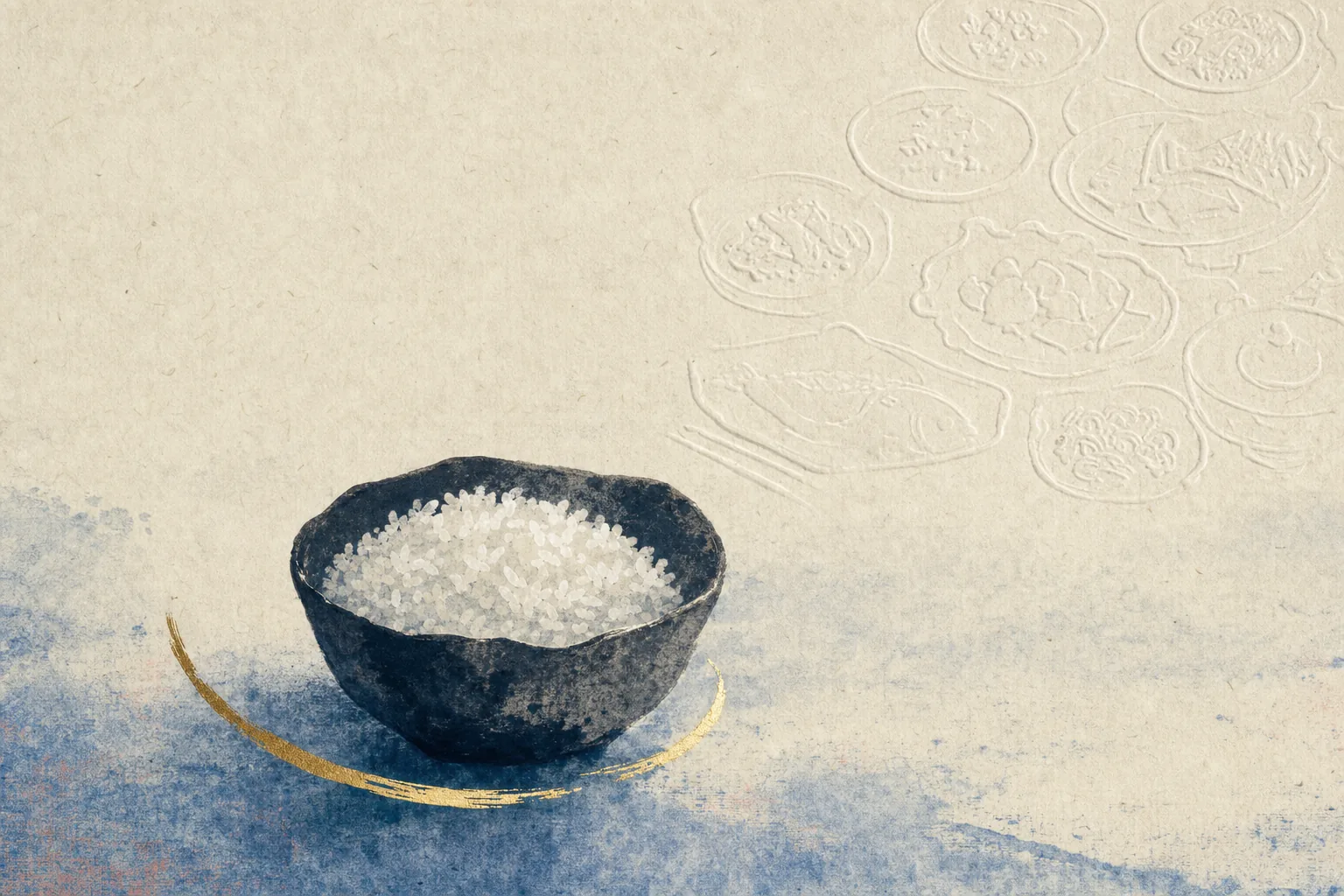
The assignment Joe describes is a single OMAD meal made only from rice. Salt or simple seasoning may be added, the bowl may be generous, and he allows the person doing the exercise to eat to fullness. Near the end, he suggests an occasional repetition—perhaps monthly—rather than a standing daily practice.
Joe prefers white rice in this context because he finds the outer layer of brown rice harder to digest. He briefly acknowledges potatoes as a possible substitute, then rejects the substitution as another attempt to negotiate away the intended constraint. The particular sameness of rice is central to the exercise he has designed.
The perfect meal as an escape route
Joe directs the exercise toward people who repeatedly restart OMAD while searching for a menu that will make the routine effortless. In his view, the ideal meal becomes an imagined solution to a problem that food selection cannot solve. Every new combination postpones the encounter with appetite and self-control.
The bowl reverses that search. Instead of making the meal easier or more exciting, Joe deliberately makes one day plainer. A person can then observe what remains when novelty is unavailable: the wish to improve the meal, the fear that it will not be enough, or the impulse to abandon the exercise. For Joe, those reactions contain more useful information than another round of recipe design.
Scarcity, appreciation, and attention
Joe contrasts voluntary simplicity with people whose diets are materially constrained. He invokes that contrast to cultivate appreciation, while recognizing that his viewers usually have abundant choice. The chosen bowl lasts for one meal; scarcity for many others is not chosen and does not end so neatly.
He also turns eating into a noting practice. Joe describes moving slowly through the bowl, silently identifying the act of eating and attending to individual grains. In his Buddhist frame, reduced variety leaves fewer distractions from the action itself.
The recording recalls a traditional story, as Joe tells it, in which the Buddha survived an ascetic period on a handful of rice each day before rejecting self-mortification. Joe’s full bowl is far less extreme. He uses the comparison to place a temporary limit between ordinary abundance and the severe deprivation in the story.
The food claims beside the lesson
Joe gives rice several practical advantages. He regards it as inexpensive, widely available, filling without being unusually difficult to stop eating, and easier for him to digest in its white form. He also claims that cooled and reheated rice contains more resistant starch and produces a steadier blood-sugar response, and that rice’s low fat content allows a quicker return to fasting. These are the nutritional explanations Joe attaches to his choice in the recording.
Yet the source devotes more attention to the mental exercise than to those claims. Rice is valuable to Joe here because it is sufficient without seeming like a perfected solution. The bowl makes simplicity concrete for one day, then lets the ordinary range of meals return with the search for rescue made easier to recognize.