

How to Stop Chocolate Binging
Joe describes chocolate binges as a recurring cycle that is more useful to notice than to debate. He says seeing the future maintenance and consequences first can reduce the craving's appeal.
The reviewed source record
This library covers 144 regular videos and 21 livestreams from the reviewed catalog. Every entry has an original editorial note, its own illustrated source page, and routes into the principles it informs. The synthesis behind those principles draws on the complete channel; this is where each recording receives its reviewed page.
Reviewed span: to · 165 of the channel’s 380 public recordings reviewed so far.
Browse the talks
Newest first by default. Titles are Joe’s original YouTube titles; the short descriptions are this site’s attributed editorial summaries.
Showing 73–90 of 165 recordings
Page 5 of 10 · Each source note links to the original recording on YouTube.
Joe describes chocolate binges as a recurring cycle that is more useful to notice than to debate. He says seeing the future maintenance and consequences first can reduce the craving's appeal.

Joe treats the chosen opening time as a precise boundary and argues that small timing exceptions can become unnoticed drift. He places the discipline in timing rather than food purity.

Joe frames OMAD as reclaiming attention rather than enduring deprivation. He argues that dividing available food across days can reduce its hold and free energy for work and other priorities.
Joe argues that willpower follows identity and the chosen direction of attention. He presents food as practical nourishment rather than an object around which to build desire.

Joe says difficulty changes when a practice is tied to clear priorities. He describes everyday hunger as shorter waves that the mind can misremember as an all-day condition.
Joe shares his personal trigger-food list as a diagnostic for recognizing drift, not as an excuse for it. He argues that noticing one's own patterns can expose the point at which automatic eating resumes.

Joe introduces running as a later-stage practice and directs beginners toward walking first. He presents exercise as a meditative practice and maintenance tripwire, not the primary cause of weight loss.

Joe maps five states of mind from scattered attention to controlled clarity. He argues that self-control, rather than allegiance to a diet ideology, is the common factor behind durable change.
Joe answers questions about returning after a lapse, observing cravings, keeping the one-meal boundary, and learning maintenance. Across the broad session, he repeatedly favors immediate execution and self-command over tracking or borrowed motivation.
Joe says attachment is sustained by repeated reactions and that cravings can be observed without turning food into an enemy. He argues that outsourced motivation cannot substitute for understanding the cycle directly.
Joe describes limiting beliefs as self-reproducing narratives that lead toward powerlessness and inaction. He uses binary thinking, convenient excuses, and crisis timing as signs of the pattern.

Joe discusses a viewer's low-glucose experience and offers his own meal-timing and composition response while explicitly limiting the scope of his comments. The episode shows where he places individual constraints around the broader OMAD framework.

Joe says nutritional adequacy is better considered across a longer pattern than within a single meal and places appetite control ahead of calculation. He presents maintenance as something learned through experimentation.

Joe argues that ordinary energy fluctuations are shaped by purpose, anticipation, and attention. He also describes accepting one's baseline instead of demanding a constant peak state.
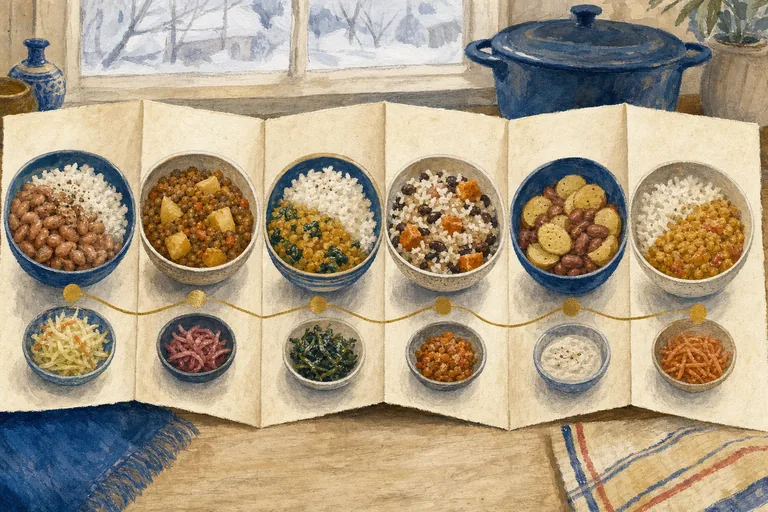
Joe presents several low-cost starch-centered meals and says repetition and portion familiarity can make OMAD more sustainable. The episode is a meal tour rather than a full protocol lecture.

Joe uses a severe winter outage to argue that changed circumstances reveal habits and character. He connects practical preparation with gratitude, impermanence, and the ability to remain content under disruption.

Joe compares hunger with training discomfort and warns against needing quick results or a pleasurable fasting sensation to continue. He argues that settled resolve is more durable than chasing a hunger high.

Joe argues that abundance and convenience can weaken appreciation and make minor frustrations loom larger. He presents deliberate simplification and self-control as ways to recover a sense of connection with ordinary things.