Editorial source note
Post-Winter Apocalypse Starch Explosion!
Joe presents several low-cost starch-centered meals and says repetition and portion familiarity can make OMAD more sustainable. The episode is a meal tour rather than a full protocol lecture.
Related principles
An editorial summary of views Joe expresses in the linked video. The original recording remains the primary source for his full words and context.
Detailed notes
A closer look at the ideas, examples, and reasoning Joe presents in this recording.
A winter pantry, recombined
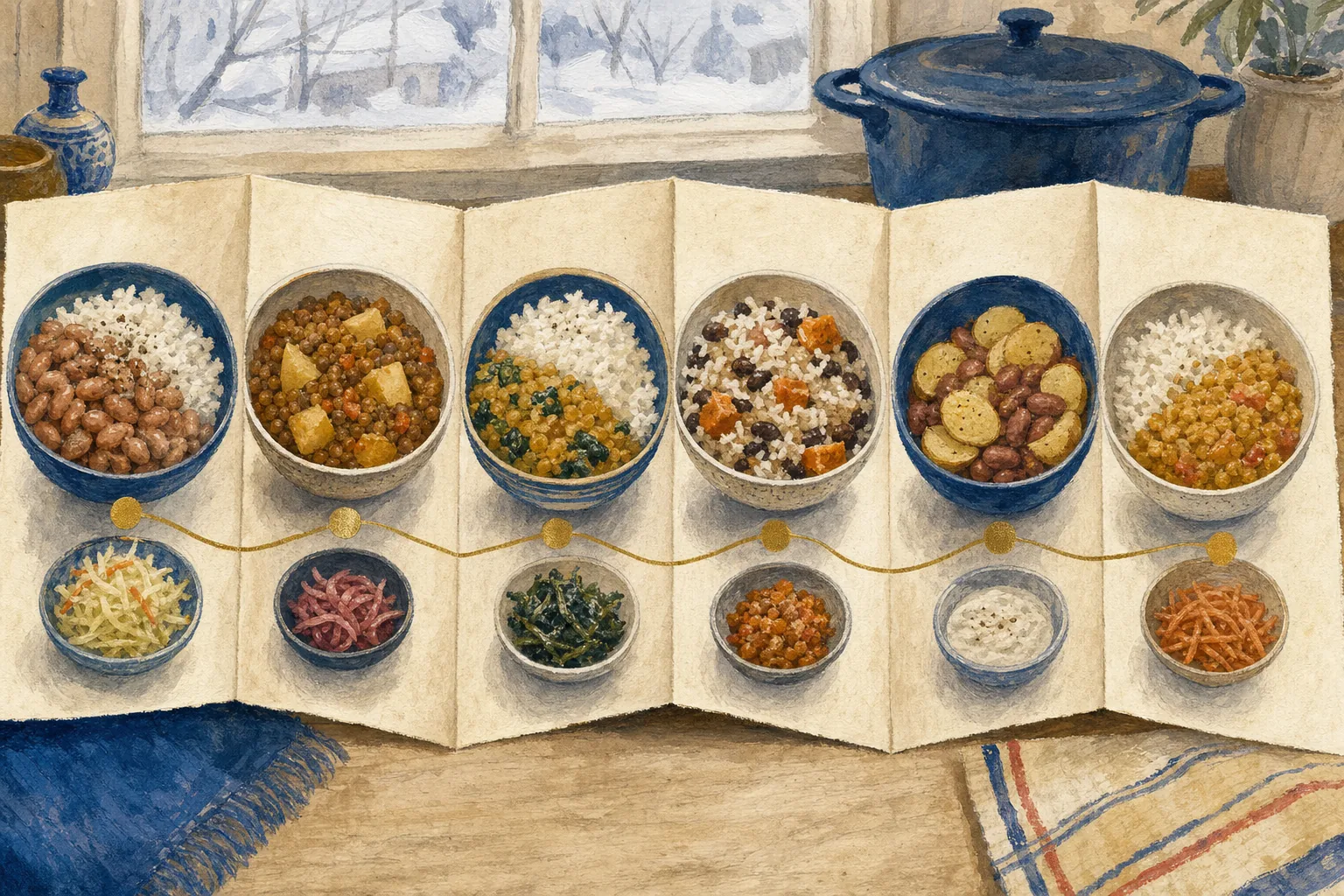
This recording is less an argument than a tour through several days of Joe’s cooking. Its recurring materials are inexpensive and ordinary: dried beans, rice, potatoes, lentils, mushrooms, fruit, and a few convenience products. The interest lies in how he keeps changing their arrangement without changing the basic pantry.
Starch as Joe’s personal center
Joe calls himself especially well suited to starch-heavy food. He says these meals feel lighter to him than meals rich in oil or meat, and he believes they let his body return to using stored fat sooner. Those are his nutritional and metabolic claims; the recording does not test them or establish that the same pattern fits other people.
The practical case is easier to observe. A single pot can supply several one-meal days, the ingredients cost little, and seasoning creates variety without an elaborate recipe. Joe presents that economy as part of the meal’s value rather than as a compromise.
Several meals from a narrow shelf
One batch begins with pinto beans that Joe says he simmered for about two and a half hours. Potatoes and mushrooms join the pot near the end, and the mixture is served over white rice. He reports that it lasted nearly four days. Elsewhere, black beans appear with Spanish-style rice and corn chips. Navy beans recur first with rice and potatoes, then with mushrooms and an inexpensive plant-based sausage.
Red lentils receive the most deliberate transformation. Joe cooks them past the point at which they retain their shape, blends the softened mixture, and adds chili seasoning and cayenne. For him, the result supplies the character of a rich chili without the oil, meat, or draining that he associates with conventional versions.
None of these combinations is treated as a formal recipe. Portions, exact seasoning, and side foods shift from day to day. Fruit, nuts, and smoothies sometimes complete the meal. The repeated beans and grains provide the structure; variation happens at the edges.
Convenience inside a simple-food ideal
Joe’s pantry is not a purity exercise. He praises a powdered chocolate-peanut product because it gives a protein drink enough sweetness for his taste without syrup. He adds chia or flax and credits those seeds with supplying omega-3 fats. In another fruit smoothie, he uses a powdered greens blend because he dislikes eating leafy vegetables directly.
Those supplement and nutrition claims remain Joe’s rationale for his own choices. More revealing is his willingness to use processed shortcuts when they remove a recurring obstacle. Simplicity, in this account, means a meal that can actually be repeated, not an ingredient list designed to demonstrate virtue.
From stocking up to knowing enough
Beneath the food tour is a change Joe notices after sustained OMAD practice. Early on, he says, the single meal can feel like a chance to fill a tank for the next day. Familiarity gradually weakens that impulse. His most satisfying example in the recording is a modest bowl accompanied by peanut candies that, together, supplied the calories he wanted without a large volume of food.
Joe closes by connecting his plant-based preference with cardiovascular and environmental benefits, including a reference to a physician who rejects foods derived from animals. Those broader claims are endorsements within his food philosophy, not evidence supplied by the meal tour.
What the camera does establish is narrower and more useful as a source note: Joe’s winter routine relies on a small set of durable staples, cooked in batches and recombined until the one-meal structure feels familiar rather than exceptional.