Editorial source note
This is a Test
Joe uses a severe winter outage to argue that changed circumstances reveal habits and character. He connects practical preparation with gratitude, impermanence, and the ability to remain content under disruption.
Related principles
An editorial summary of views Joe expresses in the linked video. The original recording remains the primary source for his full words and context.
Detailed notes
A closer look at the ideas, examples, and reasoning Joe presents in this recording.
What disruption makes visible
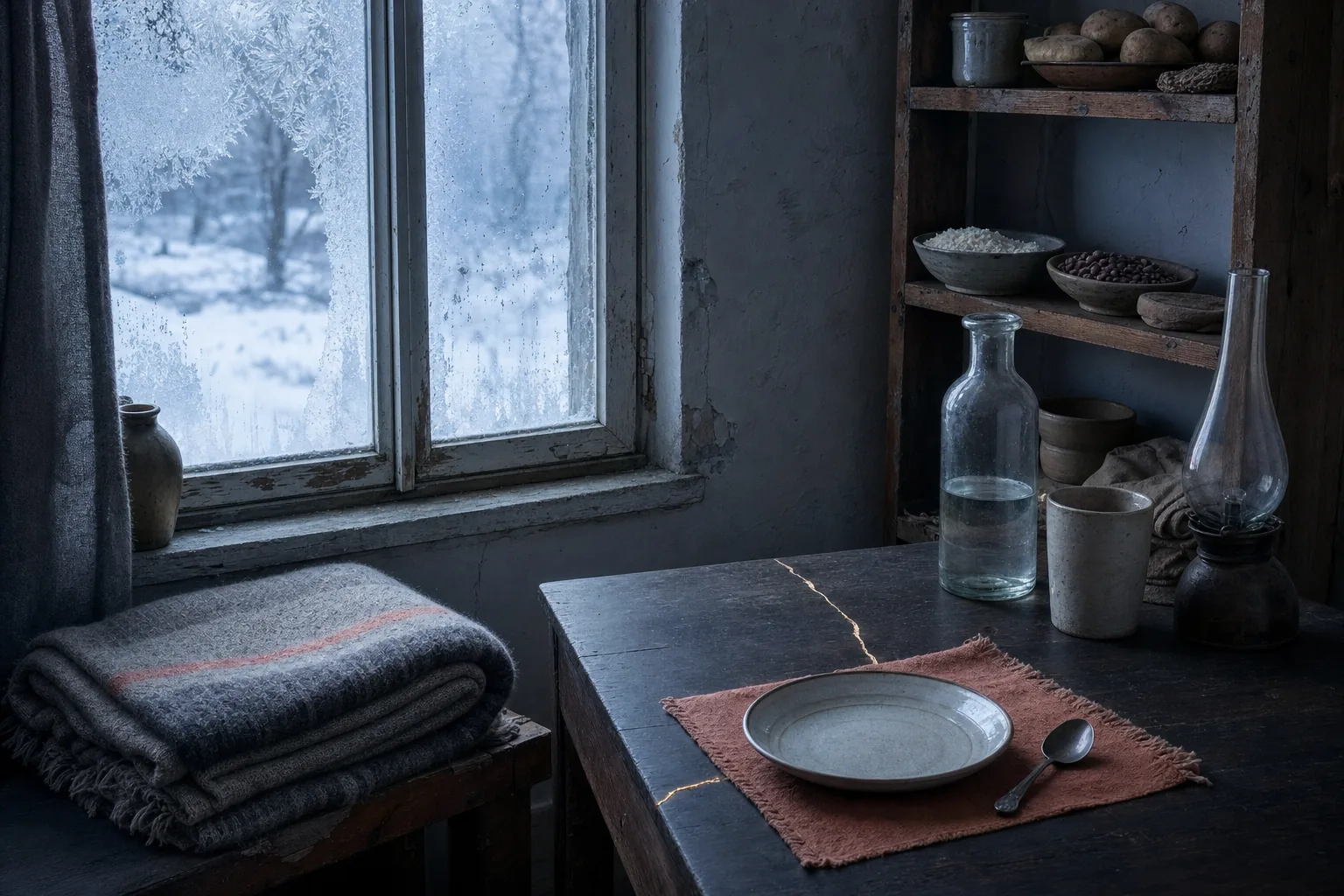
Joe records this reflection during the February 2021 Texas freeze, when electrical and water systems had failed across the region. The setting matters because his subject is not cold-weather technique. It is the difference between a character imagined under comfortable conditions and the one revealed after ordinary supports disappear.
A crisis as a diagnostic
Joe recalls a saying he attributes to Abraham Lincoln: placing someone in power reveals character. Joe then broadens the idea to changed circumstances. A widespread outage supplies that alteration quickly. Heat, internet access, plentiful water, and a secure place to sleep can move from background assumptions to immediate concerns.
He sees two forms of failure in the public response. Some people direct fear and anger at others; some simply have no idea how to proceed. Joe interprets both reactions as evidence that practical preparation and inner preparation had been postponed. His assessment is moral and psychological, drawn from what he observed during the emergency rather than from a systematic account of disaster behavior.
Impermanence enters the household
The freeze becomes an unusually literal version of a theme Joe often applies to eating. A meal is available now, but its availability is contingent. A warm room is comfortable now, but the system producing that warmth can stop. Even a minor bodily ache reminds him that physical capacity changes.
In Joe’s Buddhist framing, these examples all point toward impermanence. For him, gratitude does not require pretending that disruption is pleasant. It comes from recognizing that a reliable daily meal, shelter, and an ordinary body are temporary conditions rather than permanent entitlements.
Joe extends the thought into a stronger metaphysical claim: external life is, at some level, illusory, while lived experience and the knowledge drawn from it are what remain available. That is his philosophical interpretation of the event, not a premise the recording demonstrates.
Two kinds of preparation
The material side of Joe’s preparation is deliberately plain. Beans, rice, and potatoes are cheap, store well, and can support many meals. He also points to body fat, blankets, and reduced expectations as reserves that may matter when normal supply breaks down. These remarks describe how he thinks about resilience; they are not a complete emergency plan.
Joe calls contentment the inward reserve. He imagines a period in which little can be done beyond resting, noticing breath and heartbeat, or meditating. He treats the capacity to remain settled there as a practiced strength. One meal a day also belongs to that practice because, in his view, it makes a limited food rhythm feel attainable before scarcity imposes one.
The everyday version of the test
Joe does not confine the lesson to rare disasters. Conflict with a supervisor, partner, child, or one’s own expectations can expose the same gap between a preferred self-image and an actual response. For Joe, pressure makes habits legible.
His closing judgment echoes a proverb: strength that disappears precisely when difficulty arrives was not yet substantial. Within Joe’s framework, the freeze is therefore neither a spectacle nor proof of toughness. It is information. It reveals what had been taken for granted, what had been stored, and what kind of mind remained when convenience stopped carrying the load.