Editorial source note
OMAD - Plant-based HCLF FTW!
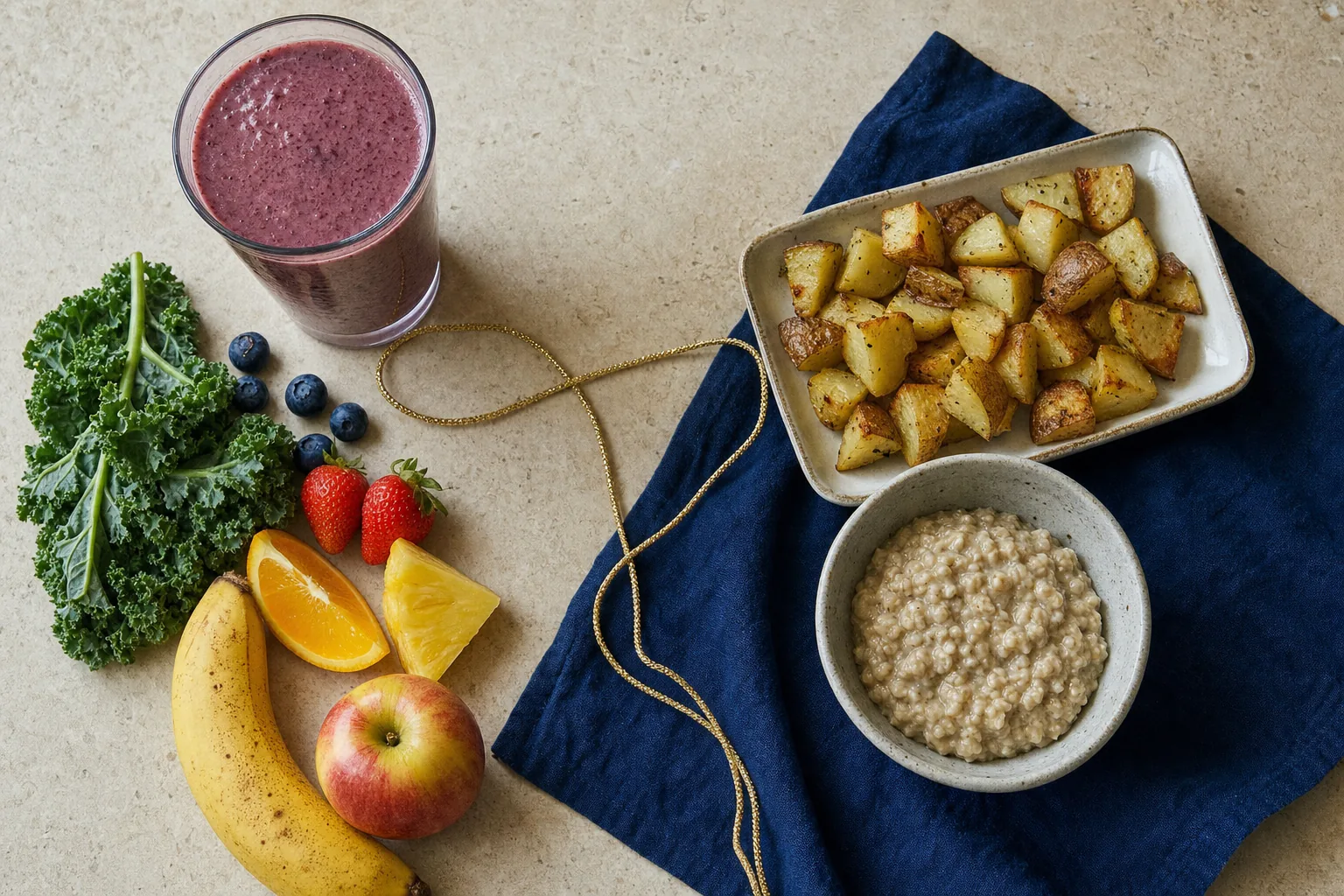
Joe shows one of his own plant-based, high-carbohydrate, low-fat meals, pairing a fruit-and-greens smoothie with potatoes and oatmeal. He presents it as a plate example, not a comprehensive OMAD lesson.
Related principles
An editorial summary of views Joe expresses in the linked video. The original recording remains the primary source for his full words and context.
Detailed notes
A closer look at the ideas, examples, and reasoning Joe presents in this recording.
A food phase captured in two portions
At ninety-one seconds, this clip belongs to Joe’s meal diary more than to his body of lectures. It records what he assembled during a plant-centered phase favoring carbohydrate-rich foods and very little fat.
Fruit, greens, potatoes, and oats
The uncooked portion is a blender filled with banana, strawberries, cherries, raspberries, kale, pineapple, orange, and apple. Joe adds brown sugar and calls the smoothie the meal’s first, comparatively raw portion.
The cooked portion combines oven-baked potatoes seasoned with Cajun spices and oatmeal topped with syrup and more brown sugar. Together they make up the daily meal shown. Joe supplies no calorie estimate or account of how often he eats this combination.
An endorsement, not a full argument
Joe emphatically endorses the pattern. Within a low-fat plant-based diet, he says, he sees no problem with adding sugar to a smoothie, even in an amount others might regard as substantial. That is his nutritional position in the clip; he does not develop an argument for it here.
The source is therefore a bounded snapshot. Joe’s ingredients and dietary emphasis can change while the recognizable structure remains one finite eating occasion. The clip establishes what he chose that day, not a universal OMAD menu.