Editorial source note
One Plate vs. One Bowl Rule (Monk Eating Guidelines)
Joe compares his one-plate rule with a Buddhist monastic bowl practice and explains how both constrain quantity and attention. He treats the physical container as a training aid for mindful eating and non-attachment rather than the ultimate goal.
Related principles
An editorial summary of views Joe expresses in the linked video. The original recording remains the primary source for his full words and context.
Detailed notes
A closer look at the ideas, examples, and reasoning Joe presents in this recording.
The container is a boundary, not the point
Joe’s plate rule translates an abstract intention—eat once, then stop—into something that can be seen. In this recording he compares that familiar device with a bowl practice he draws from Buddhist monastic life, then makes clear that neither vessel is the ultimate subject.
How the plate closes negotiation
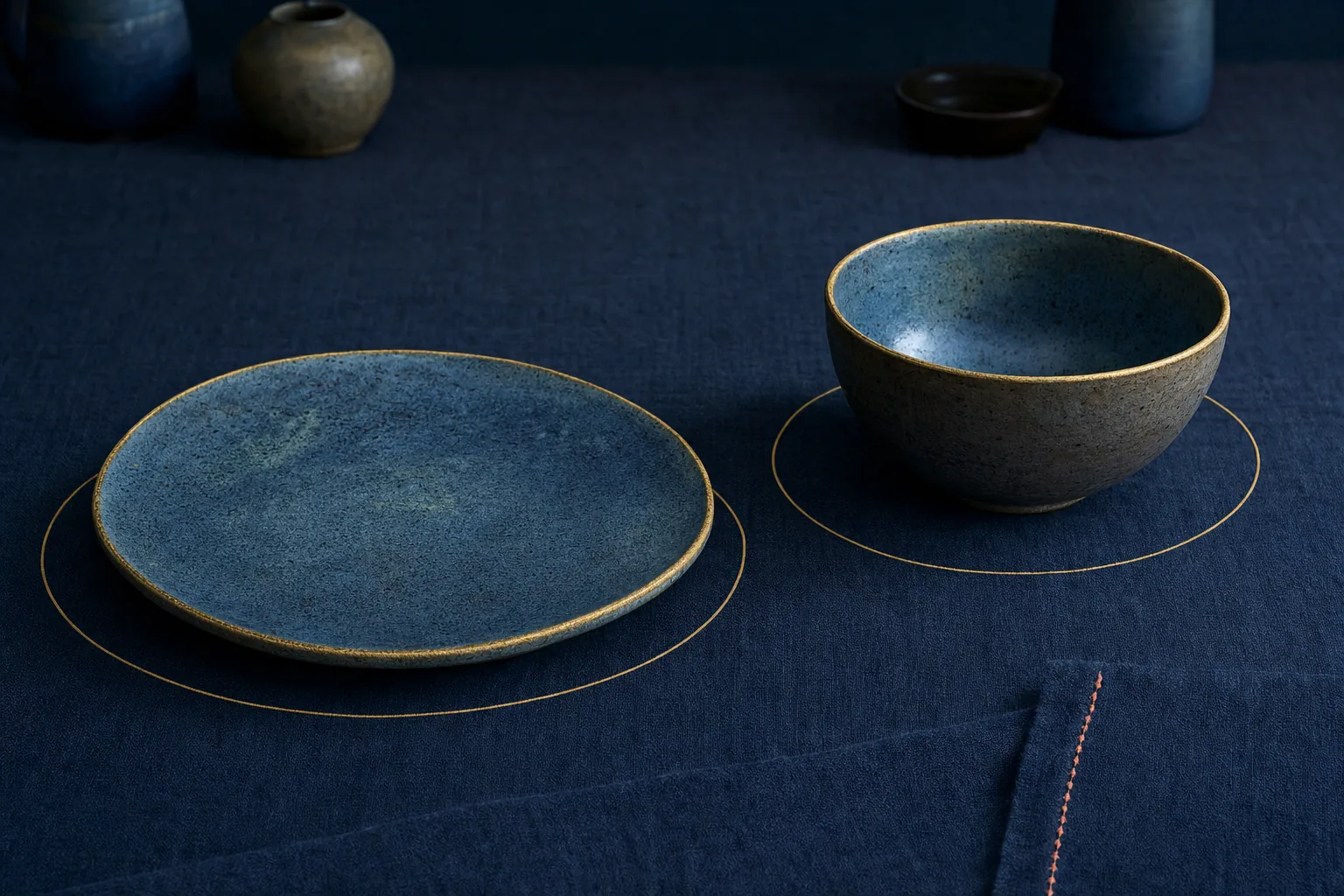
The plate Joe describes is about ten inches across. Food stays within its rim and below a height of roughly three inches; his memorable test is that a gentle shake should not send anything over the side. He credits this limit with preventing the open-ended eating that once came from bags, serving containers, and repeated helpings.
The precision is less about table etiquette than finality. A physical boundary creates a rough quantity without requiring every ingredient to be calculated. Once the plate is assembled, the decision about how much the meal contains has already been made.
What Joe draws from the monastic bowl
Joe then describes an alternative modeled on Buddhist monks who receive food in an alms bowl. In his account of their rules, the meal is completed before noon, the food is accepted rather than selected or stored, and attention stays with the act of eating. The bowl is cleaned when the meal is over.
He is especially interested in two constraints. Junior monks wait for senior monks to begin, turning hunger into an occasion for composure. Foods placed together in the bowl are also mixed, interrupting the expectation that every bite must preserve a preferred combination or taste. Joe connects the first practice with a short waiting buffer he used himself and the second with his effort to weaken fixation on particular foods.
These are the monastic customs as Joe presents them in the video, not a survey of every Buddhist community. What matters to his comparison is the way ritual narrows choice and directs attention.
Scaffolding for self-command
Joe explicitly calls the plate or bowl a signpost rather than an essential feature of OMAD. If a restaurant, buffet, or extra container no longer turns one meal into uncontrolled eating, he sees less need for a rigid vessel. If the boundary still changes behavior, he regards it as useful structure.
That distinction reveals the philosophical aim beneath the household rule. Joe wants eating to be an ordinary sensory act rather than a vehicle for nostalgia, status, consolation, or fantasy. He associates mindful eating with noticing what is present while refusing to let liking and disliking organize the entire meal.
The plate and bowl therefore measure more than volume in his framework. They make the end of the meal unmistakable while a different capacity develops: eating with attention, then allowing food to leave the center of attention when the vessel is empty.