Editorial source note
Friday Night - Wisdom, OMAD Meals, & More!
Joe describes his then-current starch-centered meal pattern while retaining a fixed fasting boundary and a maintenance margin. He also discusses his personal stone history and argues that longer fasts should remain subordinate to a stable OMAD practice.
Related principles
An editorial summary of views Joe expresses in the linked video. The original recording remains the primary source for his full words and context.
Detailed notes
A closer look at the ideas, examples, and reasoning Joe presents in this recording.
A late-2024 snapshot of Joe’s changing diet
Recorded while Joe was recovering from foot surgery, this long informal stream combines a meal update with questions about fasting, beverages, protein, kidney stones, longer fasts, and maintenance. It captures one particular phase of his practice: a low-oil, starch-centered menu held inside the same one-meal boundary he had taught for years.
The starch-focused meals he was eating
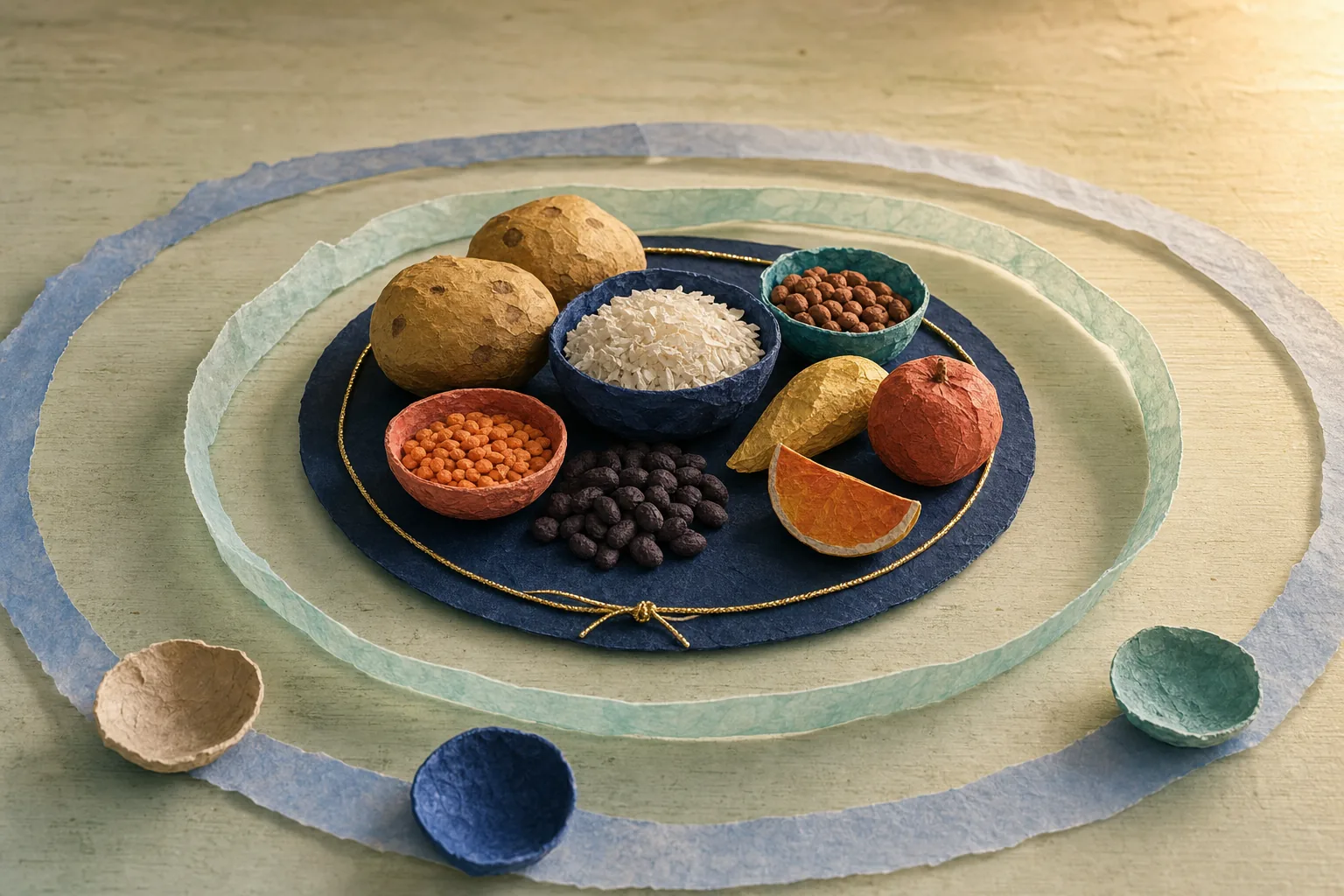
Joe describes his diet at the time as centered on potatoes, rice, beans, lentils, and fruit without added oil. He remains comfortable with salt, soy products, and some added sugar, including sugar on fruit he considers insufficiently sweet. He credits John McDougall as an important influence on this approach.
Joe reports losing weight rapidly on these meals, maintaining a low A1C, using no medication, and spending little on food. He also says that digestive discomfort around starch diminishes as the gut microbiome adapts. These are his personal results and physiological explanations in the stream, not comparisons of the diet with other approaches.
During his surgical recovery, Joe further claims that remaining in a fasting state reduced inflammation, water retention, and pain and accelerated healing. He recalls using only one narcotic pain dose. The livestream does not establish that fasting caused the recovery pattern; it shows how he interpreted his experience.
What he permits during the fast
The meal’s contents may have changed, but Joe’s fasting boundary remains strict. Caloric beverages stay inside the meal. He again rejects cream in coffee, reasoning that even a small amount of fat interrupts the metabolic state he wants. Zero-calorie soda and coffee with noncaloric sweetener remain acceptable in his framework, and he describes black coffee as useful for reducing hunger.
Joe also recommends paper-filtered rather than instant coffee for people concerned about cholesterol, claiming that the filter removes oils associated with homocysteine and LDL. More broadly, he advises eliminating added oils when lipid measurements are alarming. Those health conclusions are presented as Joe’s position in the discussion.
His recurring phrase for these compromises is that weight loss involves choosing among imperfect options. A zero-calorie sweetened drink may not represent his ideal food philosophy, but he considers it preferable to a caloric interruption that makes the fasting routine harder to sustain.
Protein, oxalates, and the limits he proposes
Joe confines protein shakes to the meal and sees little purpose in them for most people. He claims dairy-based shakes can promote weight gain and constipation, that excess protein can be converted to glucose and increase later hunger, that absorption in one sitting is limited to roughly forty grams, and that high intake burdens the kidneys. He invokes Walter Kempner’s very-low-protein dietary treatment as part of this argument. The stream does not independently evaluate those claims.
Questions about kidney stones lead Joe to distinguish his own suspected triggers from the starches on his plate. He calls potatoes and beans moderate in oxalate and says cooking removes much of the oxalate in potatoes, while identifying leafy greens and nut milks as foods he watches more closely. Reflecting on his own stones, he also mentions liquid sugar, bread, and peanut butter and says he emphasizes water because he regards himself as prone to recurrence.
Fruit can occupy about half of his meal, followed by potatoes or rice. Although Joe concedes that fruit grazing might not produce the same weight effect as other foods, he rejects it because it dissolves the fasting structure. A smoothie could theoretically constitute the meal, he says, but would need enough volume to function as the meal rather than a drink added around it.
Maintenance, splurges, and longer intervals
For maintenance, Joe recommends reaching ten to fifteen pounds below the weight at which someone intends to live. The margin is meant to absorb a holiday or planned higher-intake period without turning ordinary fluctuation into panic. He similarly recommends removing leftover celebratory food after the event because repeated exposure can turn one planned exception into several unplanned days.
Joe criticizes exclusive diet movements, using carnivore influencers as his main example. He interprets reports of adherents abandoning the diet or showing poor health markers as another instance of a fad becoming a commercial identity. That critique supports a theme he had emphasized elsewhere: dietary movements are impermanent and should not become unquestioned authorities.
Experienced fasters, in his view, may benefit from alternate-day, 72-hour, or 96-hour intervals. Joe advises beginners to establish ordinary OMAD first and warns against using longer fasts as compensation for unrestricted eating between them. Across the varied questions, he returns to the same hierarchy: menu theories and extended protocols remain secondary to a repeatable boundary and the self-control required to keep it.