Editorial source note
The Healing Foods Series (3) - The Perfect OJ!
Joe demonstrates a fruit drink and describes whole-food preparation as a mindful ritual. He also argues against dietary purity, presenting consistency and workable imperfection as more valuable than an ideal label.
Related principles
An editorial summary of views Joe expresses in the linked video. The original recording remains the primary source for his full words and context.
Detailed notes
A closer look at the ideas, examples, and reasoning Joe presents in this recording.
Preparation as practice, imperfection as policy
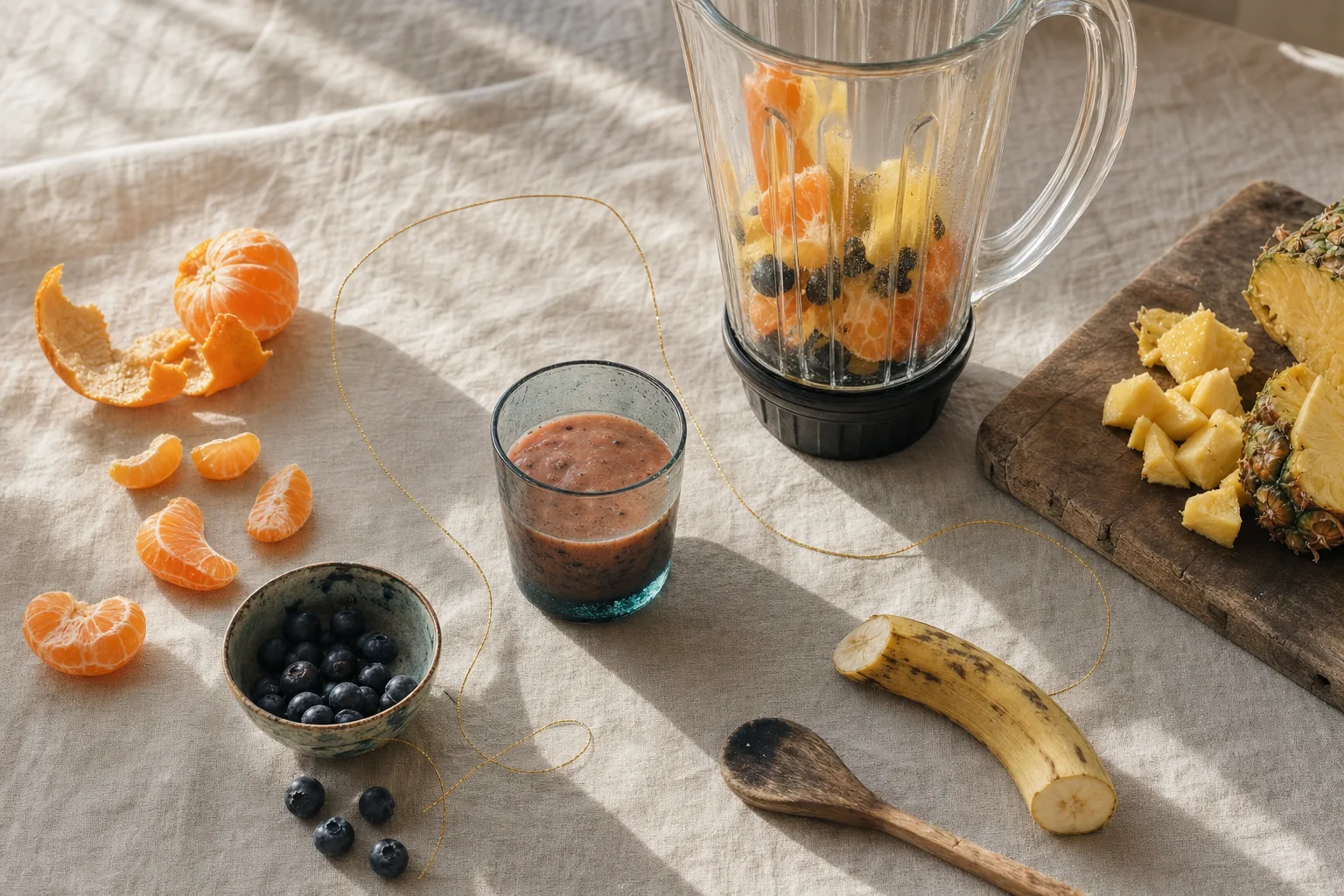
Joe calls the drink orange juice, but the demonstration is closer to a whole-fruit blend. He combines mandarin oranges with pineapple, strawberries, cherries, half a banana, ice, and water. The remaining banana sits beside buckwheat-groat tacos, which he presents as the solid part of the meal.
What he puts into the glass
The pineapple supplies the flavor Joe thinks ordinary orange juice lacks, while the banana gives the mixture a creamier texture. He also adds no more than a tablespoon of ground flax. Joe says flax meal is easier to absorb than intact seed and credits it with supporting fatty-acid production in the gut. Those digestive claims are his explanation for the ingredient, not findings established by the preparation itself.
The recipe matters less to Joe than the handling of it. Peeling, cutting, and blending make the meal take time, and he values that time as a form of attention. Food prepared from recognizable ingredients cannot appear instantly; the person making it has to see and touch what will be eaten.
A ritual of attention
Joe describes this contact as a wholesome ritual and says it creates a reciprocal relationship with food. In his account, preparation makes nutrition less abstract and turns the beginning of a meal into a deliberate event rather than a reflex.
He adds a spiritual interpretation drawn from what he calls Indian and Middle Eastern sages: careful preparation can place good karma into food. Joe does not insist on the proposition as a literal mechanism. He values the feeling and attentiveness produced by acting as though the preparation carries moral weight.
Why the meal is deliberately imperfect
The tacos introduce the video’s second argument. Their tortillas may contain buttermilk even though the filling is plant-based, just as fruit may carry pesticide residue, tap water may contain unwanted substances, and an occasional diet soda may contain artificial sweetener. Joe says the body can tolerate such departures and argues that progress should continue without an investigation into absolute purity. That confidence about what the body can handle is his view.
For Joe, a purity standard has no stable stopping point. Once a minor ingredient disqualifies a meal, the same reasoning can move from dairy traces to honey, agricultural residue, and every other uncertain detail. He illustrates the problem with a notably long-lived physician whose mostly vegan diet still included some fish, and with an online food-purity persona later undermined by undisclosed drug use.
The contrast defines the episode. Joe favors whole foods, but he does not treat a label as the source of control. The fruit blend and cooked tacos are useful because they make a workable meal and reward preparation. Their value does not depend on proving that every component is perfect.