Editorial source note
Fasting and Muscle Loss (Bear vs. Human Fasting)
Joe screens a grizzly-hibernation documentary to explain the one trick his role model bear has that humans lack — recycling urea back into muscle-building amino acids — and why human fasting therefore needs beverages, nutrients, and refeeding.
Related principles
An editorial summary of views Joe expresses in the linked video. The original recording remains the primary source for his full words and context.
Detailed notes
A closer look at the ideas, examples, and reasoning Joe presents in this recording.
The bear's fast and the human's, distinguished
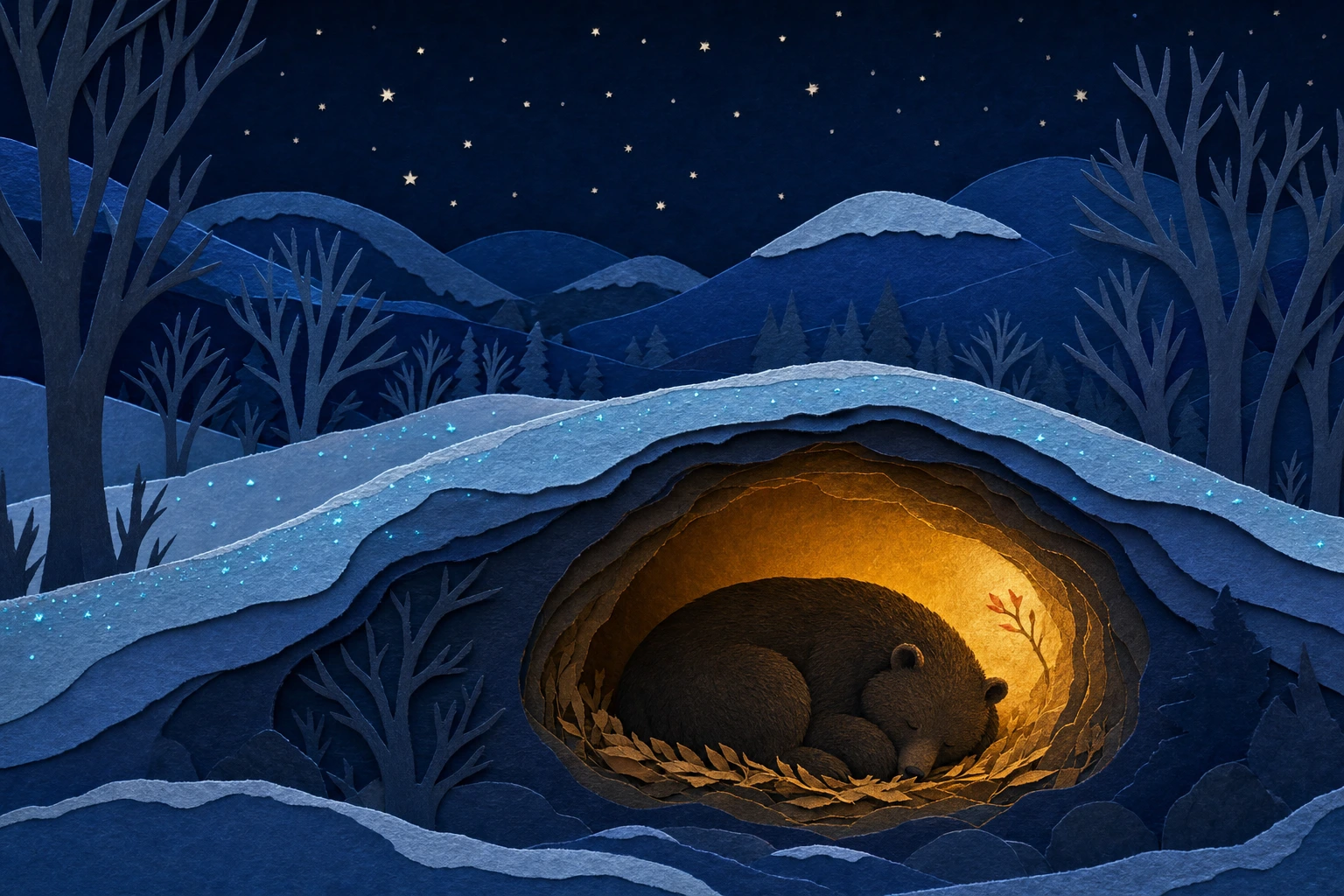
In this short January 2019 video Joe returns to what he calls his role model bear — the animal he credits with inspiring his entire fasting journey and the channel itself — to settle viewer questions about dry fasting, water fasting, and one meal a day. Most of the runtime is a nature-documentary segment on grizzly hibernation, which Joe presents as the definitive explanation.
The segment describes the hibernating bear as a self-contained recycling unit: fat supplies its calories and water, muscle and lean tissue supply its protein, and — uniquely among animals, in the documentary's account — its kidneys and liver reprocess toxic nitrogen urea back into amino acids that rebuild the very muscle consumed. The bear keeps its strength and produces no waste through a months-long pure fast.
The limit Joe draws from it
Joe's framing is the contrast: humans lack that urea-recycling mechanism. That, he says, is why the bear can fast absolutely while humans must fast with beverages and must get their nutrients at some point — and why even protein-averse eaters need adequate protein eventually. His takeaway for viewers worried about muscle loss is that fasting bodies do draw on muscle for protein, even the bear's, so human fasting is properly delayed gratification with refeeding, not indefinite abstinence. The analogy, as Joe presents it here, has a stated boundary.